

Meta description: Turn a D&D character’s defining choices, keepsakes, and campaign milestones into a personal fantasy tattoo design built to read clearly and last.
A character’s backstory can fill a page. A campaign can fill a shelf. A tattoo has to make its meaning felt in a glance.
That’s the fun, and the tricky part. The best dungeons and dragons tattoos don’t try to squeeze an entire character sheet onto your skin. They find one story beat worth carrying forward, then translate it into an image with its own shape, balance, and staying power.
Maybe your paladin broke an oath and built a better one. Maybe the ranger still wears a token from the companion who never made it home. Or perhaps your whole party has a shared symbol scribbled on the back of a map. Whatever the spark, the design should belong to your story, even when the campaign notes are long gone.
Here’s a practical way to turn that spark into lasting fantasy tattoo art.
🗺️ Find The Moment That Changed The Character
Start with the character’s turning point, not their class, ancestry, or favorite weapon.
Ask yourself: What did they believe at the beginning? What tested that belief? What choice changed who they became? The answer often gives you a stronger tattoo concept than a list of fantasy motifs ever will.
Try finishing this sentence:
This tattoo remembers [a choice, bond, loss, or change] through [one central image].
For example: “This tattoo remembers a disgraced paladin rebuilding their faith through a cracked holy symbol with a green shoot growing through it.” The broken symbol carries the fall. The new growth suggests a future that hasn’t been earned easily.
If the idea still needs a paragraph of explanation, keep digging. A good design can hold extra meanings, but it needs one clear doorway into the story.
✦ Turn Plot Details Into Personal Symbols
A campaign may give you a library of memorable moments. A tattoo usually needs a small, edited cast: one focal image, with a few supporting details at most.
Translate what happened into something that can stand on its own:
- A lost companion: a feather, animal silhouette, constellation, or keepsake they left behind.
- A broken oath: a snapped ring, split sigil, severed thread, or scarred banner.
- A journey home: a road marker, folded map, distant lantern, or familiar skyline.
- A hard-won act of mercy: a sheathed blade, open hand, or thorn-covered flower.
- A dangerous bargain: a sealed eye, tied knot, or candle with two flames.
- A party’s bond: linked symbols, a shared relic, or distinct marks arranged as one emblem.
A signature item can be especially useful. The sword may not be the story; the chipped pommel your character repaired before the final battle might be. That detail gives the artist a visual anchor, and gives the tattoo a meaning that’s yours rather than a stock reference to a class.
Try not to make every symbol compete for top billing. If the design needs a weapon, a dragon, three runes, a map, your character’s initials, and the party’s logo, decide which of those carries the heart of the story. The rest can become quieter details or stay on the page.
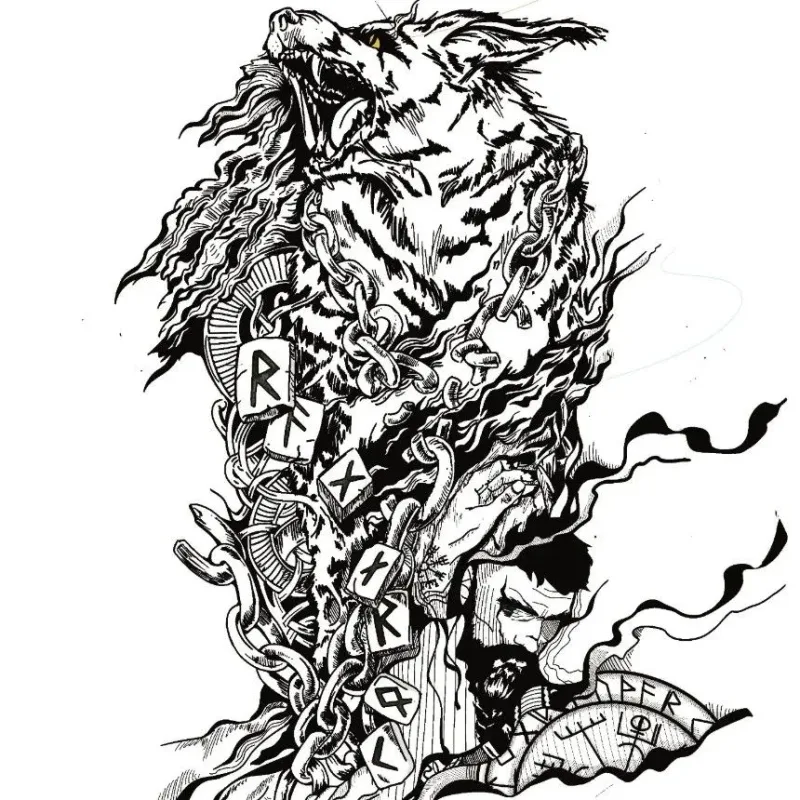
Begin with an image that carries a story, not a pile of references.
🖋️ Decide What The Tattoo Means To You
The same campaign symbol can feel very different depending on who it’s for and how the character relates to it.
Is it a private memorial? A vow your character would want the world to see? A badge of belonging, or a mark they’ve reclaimed from someone who used it against them? Those answers affect the design’s mood, scale, and placement.
A public oath might read as a bold emblem. A private memory might be a small, restrained image with a detail only you recognize. A character reclaiming a brand could transform it, break it, or surround it with new symbols. The visual doesn’t have to copy what the character received in the story. It can show what they chose to make of it.
This is also a good time to consider cultural references. Your character’s fictional tradition can inspire the composition, but avoid borrowing sacred real-world symbols or tattoo practices without understanding their context. Personal fantasy art doesn’t need someone else’s cultural language to feel ancient, meaningful, or magical.
🎨 Design For Skin, Not Just The Sketchbook
A tattoo is art, but it’s also art placed on a moving body. A design that looks wonderful zoomed in on a screen still needs to read at its intended size and placement.
Think in terms of silhouette, focal point, and breathing room:
- Silhouette: Is the overall shape recognizable at a glance?
- Focal point: Does your eye know where to land first?
- Breathing room: Are the important lines and details separated enough to remain clear?
Fine linework can be beautiful. So can dense ornament and tiny runes. But the more detail you include, the more space the design may need. Your tattoo artist can help assess what’s workable for your body and the design’s scale. Ask how the tattoo is expected to read once healed and over time, not only how the fresh drawing looks on a bright screen.
Placement should serve both the artwork and your life. A forearm offers a clear, visible canvas; the upper arm or thigh may give a design more room or privacy. Curves and movement can affect how a shape sits, so ask the artist to consider the body in the design rather than treating it like a flat sheet of parchment.
If the campaign is still running, you can leave room for a future chapter. An open arc, a few separate stars, or a loose trail of leaves might make later additions feel intentional. But don’t leave empty space just because the campaign might continue. The tattoo should feel complete even if the story ends tomorrow.

One strong motif. A clear silhouette. Space for the story to breathe.
📜 Build A Brief Your Tattoo Artist Can Use
Your artist doesn’t need your campaign’s entire session log. They do need to understand the meaning, the practical limits, and the visual direction.
A useful brief might include:
- A one-sentence meaning statement.
- A short version of the character’s backstory, focused on the moment behind the tattoo.
- The signature item, person, place, or choice you want represented.
- Your preferred style, placement, approximate size, and color preferences.
- A few reference images that show mood or linework, not a design to copy.
- Details to include, and details you’d rather leave out.
If you’re commissioning a custom design, bring references from different sources: perhaps a campaign sketch, an image of the keepsake, and an example of the kind of linework you like. Explain what you want to feel from the final piece. “Quietly protective,” “weather-beaten but hopeful,” or “like an old ward scratched into a shield” gives the artist room to interpret while keeping the work rooted in your story.
Mythnink creates custom fantasy tattoo commissions alongside illustrations and tabletop goods. You can open a commission inquiry with a rough idea, reference, or half-remembered campaign moment. A tattoo design commission is artwork for you and your tattoo artist to discuss; consult the tattoo professional doing the work about final size, placement, technique, and what will suit your skin.
🧭 Test The Idea Before The Ink
Before you commit, look at the design at its intended size. If possible, see a placement mock-up and ask your tattoo artist how the composition will sit when you move. Then view it from a normal distance. Can you spot the main image without squinting? Does it still feel meaningful without a full explanation?
A few more questions can reveal whether the concept is ready:
- Would I still want this if the campaign ended today?
- Does this represent a defining choice, or just a favorite aesthetic?
- Are any details too small or crowded for the placement?
- Will I be happy to see this often, and happy to explain it when I feel like it?
- Is there a reference I’m copying too closely instead of using as inspiration?
Take your time. A few thoughtful revisions are part of the creative process, not a sign that the idea has failed. And when you’re ready to book, choose a licensed, experienced tattoo professional, ask about their safety practices, and follow their healing guidance. The FDA’s tattoo safety guidance is worth reading before an appointment, too.

Plan for the body, the present moment, and any story you may want to add later.
⚔️ A Character’s Story, In One Mark
Picture a tiefling rogue who escaped a thieves’ guild after refusing to betray a childhood friend. The friend didn’t survive the escape. The guild’s mark was a keyhole.
A literal portrait, dagger, and d20 might announce “rogue.” But a broken key passing through that keyhole, and shifting into a feather, can carry more of the character’s story. The broken key holds the escape and the loss. The feather remembers the friend. A dark red accent might nod to the character’s heritage without turning the design into a color chart.
The image can be adjusted to the wearer and placement. Perhaps it’s a small, private design; perhaps it becomes a larger piece that leaves room for another symbol from the campaign. Either way, the tattoo doesn’t need to explain every session. It needs to hold onto the part that still matters.
🧰 Need A Spark From The Campaign?
If you’re a DM looking for a campaign detail that could become a player’s keepsake, the free, interactive Mythnink Workshop offers quick creative tools with no account or login required. Use the Settlement Generator to find a landmark or local rumor, the NPC Generator to explore a memorable character, or the Encounter Generator to find a moment that changes the party’s path. These are prompts for your table, not a substitute for the DM deciding what catches fire.
The Campaign Trail can help you mark where the party went and which discoveries earned a pin on the map. Let the campaign tools stir the ink; the final meaning belongs to you and your story.
The Workshop is still growing. NPC, Tavern, Encounter, Fantasy Name, and Magic Item generator tools are marked Coming Soon where they aren’t available yet, no release dates, just more doors on the horizon.
❓ Frequently Asked Questions
What makes a good D&D tattoo idea?
A good idea connects to something personal: a choice, bond, loss, promise, or transformation. Start with the story you want to carry, then find one image that expresses it clearly.
Should I get my D&D character’s portrait tattooed?
You can, especially if the portrait itself is what matters most to you. But a symbol, keepsake, or scene from the character’s story may be easier to adapt to different placements and may carry the meaning without relying on anyone recognizing the character.
How do I make fantasy tattoo designs feel personal?
Use details that belong to your campaign: a repaired weapon, an invented faction mark, a familiar’s silhouette, or a place where an important choice happened. Pair that detail with a clear meaning statement, then work with an artist to shape it into original artwork.
Can I add to a campaign-inspired tattoo later?
Yes. Discuss that possibility early with the tattoo artist. You can plan a design with intentional space for future elements, while making sure the first version feels complete on its own.
Do I need to explain the full campaign to a tattoo artist?
No. Share the part of the story that informs the design, plus the relevant symbols and visual references. A concise brief is often more useful than a full campaign history.
A character may leave the campaign behind. The meaning of their choices can travel with you.
Find the one image that holds the tale. Give it room to breathe. Then carry it forward, in ink, with your own mark upon it.